
Helping Your Child See Why Their Life Matters Can Be Found in Their Inherent Gifts

Bright Side Series | Headwater Athletics | May 2026
I remember a woman on the subway in New York City. The commute home, crowded, tired, utterly ordinary, the rhythmic sound of wheels against metal tracks. And then she began to sing Amazing Grace. No warning. No stage. No announcement. She looked like she may have been homeless. I didn't know her story and I never will. But her voice filled that subway car like it was built for exactly that moment. It produced a sense of awe in me that I have never forgotten. I stored that moment away and I have been carrying it ever since.
Because that is what a gift does when it comes through someone completely and without apology: it doesn't just entertain or impress. It touches something in the person receiving it that they didn't even know needed touching. And she had no idea. She was just singing. The gift was so natural it didn't even know it was a gift.
I see it everywhere, once you learn how to look. The opera singer, a man, who rides his bike through the streets of New York City, singing to build his endurance, his voice spilling into the street whether anyone is listening or not. The chef whose food brings you to tears mid-bite, not because of what is on the plate but because of what the person put into making it. Randi, a grandma, a former accountant, and one of my daughter's friend's grandmas, who writes a food blog called Cook and Tell and whose meatballs and thumbprint cookies will stop you completely and make you feel, for a moment, that everything is exactly as it should be. The barista who hands you a perfect latte on a cold Saturday morning and has no idea they just changed the whole shape of your day.
God puts a gift in everyone. I have always believed that. My father taught me to believe it.
When I was young, we would sit together and watch people, strangers passing by, and have discussions about what we supposed their life was like. Who they were. What they were going through. That game gave me a thirst to know and understand people. To look for what was alive in them. To find the gift that was trying to come through. My father told me I was made for something great. He told me how I walked in the world mattered: to have integrity, to look for the good in people. His eyes still twinkle when he meets someone new. He is always looking for what makes a person interesting. He lets them shine in the revealing of themselves.
I have never stopped playing that game. And somewhere along the way, I started applying it to the most important person I have ever had the privilege of watching.
My daughter.


What the science is catching up to
Before I tell you about my daughter, I want to say something plainly. Celebrating what is right with your child is not the same as ignoring what is hard. Any parent who has walked this road knows that. And I am not a perfect parent. We are not a perfect family. The outside world does not always understand what they are seeing, and that is one of the lonelier parts of this journey.
The exhaustion is real. The daily effort a neurodiverse child makes just to keep up, effort that is largely invisible to everyone around them, is real. You cannot over-plan. You cannot push without consequence. You learn, over time, to read the signals. To know when to offer and when to step back.
I try to look at what is right with my daughter. But I also keep one hand extended, helping her with the things she struggles with every day. It is a balancing act. It is a bit of a dance.
And transitions are hard for my daughter, even toward the things she loves most. Even the pool, which she adores, can be a battle to get to on certain days. If it is something new we are trying, something her brain hasn't yet learned to trust, that is harder still. So I have learned not to push. I place the opportunity in front of her and I step back. I let her find her way to it in her own time.
Putting her art supplies on the dining room table on a Saturday morning. Leaving the room. Letting her decide: is this something I want to do today? Sometimes she walks past. Sometimes she sits down and disappears for hours. Either way, the choice was hers. And that matters more than I can say.
One hand holding what is hard. One hand reaching toward what is right. That is the dance.
"When a child is struggling, the instinct is to put out the fire. But what if, at the same time, you lifted them up and let them shine?
These two things can happen together."
This is not a post about ignoring difficulty. It is a post about refusing to let difficulty be the only story. About what becomes possible when you hold both things at once, and when you make room, again and again, for your child's gifts to breathe.

My daughter and the scoreboard nobody else could read
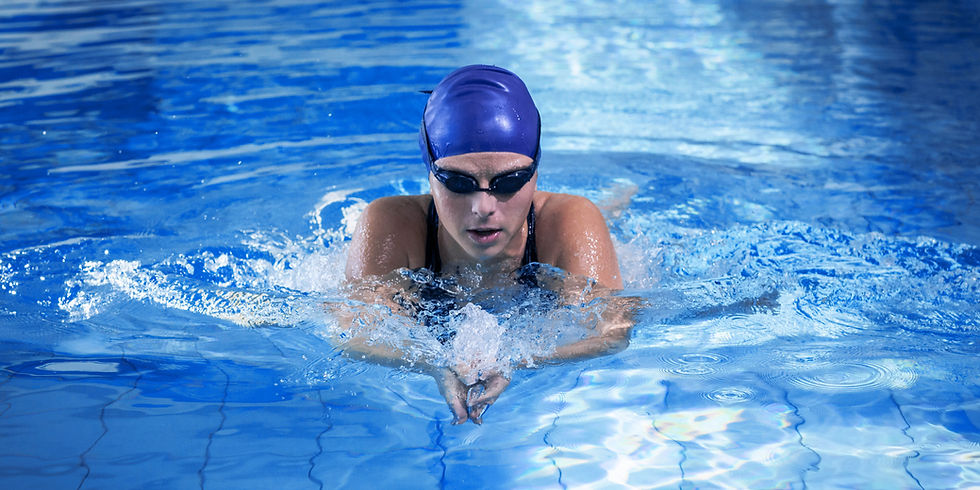
Before my daughter ever got on the blocks, her pediatrician had recommended getting her into a sport, at least an hour of movement every day. A good friend suggested swimming. My daughter loved the water, had friends on the team, and it made sense to all of us. What none of us knew yet was just how much the water would give back to her.
At one point, my daughter was attending two schools simultaneously, a specialized school with a dyslexia focus in the mornings, and the public school down the street, which she loved, in the afternoons. She was navigating two completely different educational worlds every single day. And she was going to swim practice in the evenings and volunteering one day a week at the Humane Society, all things she had asked to do.
By the time my daughter got in that pool after school, she had already run a marathon. Hours of working twice as hard as her peers just to keep up in classrooms that asked things of her brain that came more easily to the kids around her. From the outside, she looked slow in the water. From where I stood, she looked like a child who got in anyway.
That is resilience. That is grit. And it doesn't always look the way we expect it to. Showing up was a win. And I have never stopped believing that.
Parents outside of swimming sometimes don't understand what they are seeing. Your child swims four or five times a week, then goes to meets. That can look intense from the outside. But for a child like mine, it is not intensity: it is belonging. She loves the water. When she is not at practice she is at the pool for fun, or in the bath. Some kids are just like that. The water is home.
She has collected t-shirts and sweatshirts from meets over the years. When they sell them, we buy them. She wears one almost every day. That is not something you do for a sport you are enduring. That is something you do for a sport that is part of who you are.

The morning the mountains changed everything
In the summer, we go to the mountains, which my daughter loves. She attends Every Child Reading Camp in Vail, a remarkable program she loves completely, and swims with the local summer pool team, a fun and relaxed group.
During the four weeks of summer school, she was swimming in the evenings, after just three hours of academic work. She was slow. Because for a child with ADHD and dyslexia, even three hours of navigating a world that asks your brain to work differently is genuinely exhausting in ways that don't show on the surface. This is what the research means when it talks about conditions. The same child. A different hour. A completely different result.
When summer school ended, my daughter shifted to morning practices. The same pool. The same team. The same girl. And the coach could not believe what they were seeing. She was fast. Not a little faster. Genuinely, surprisingly fast. A sprinter. At meets, held in the mornings, she flies.
Nothing changed about my daughter. Not her talent, not her effort, not her heart. Just the hour on the clock. And everything the world saw changed with it.
A day in the life of a child with ADHD and dyslexia is not eight hours. It is a marathon disguised as a Tuesday. By evening, she has already given everything she had. The pool just didn't know that yet.
It bothers her that she can't always keep up at evening practice, deeply bothers her, enough that she put it down as one of her goals for this season. She wants to keep up with the girls in her lane. I hold that with her. And I also hold this: she is a sprinter. She found her event. And when the conditions are right, she is extraordinary.
My job as her mother is not to fix her. It is to keep finding the conditions where she can show the world who she already is.

The pool, the paint, and the kennels
There is something else I have watched happen at the pool, time and time again. Sometimes my daughter drops into the water after school in a very bad mood. She doesn't want to be there. Getting her there on those days is its own kind of work, because transitions are hard, even toward the things she loves. But within about ten to fifteen minutes of practice, something shifts. She seems lighter. At the end she has a smile on her face: she is often the last one out of the locker room, soaking in the hot tub with her friends, visiting while she gets dressed. She is an entirely different kid than the one who walked in the door.
The water knows something she doesn't, in that moment. And it is never wrong.
There is real science behind this, more than we have room for here. Something is happening in a dysregulated nervous system when it meets a pool that goes beyond exercise. It is neurological, it is ancient, and the body understands it before the mind catches up. We will be exploring the science of the vagus nerve and water in an upcoming post. Watch this space.
And then there is art. When my daughter was attending both schools, she missed art class: it fell on the same morning as the dyslexia school. Art was not optional for my daughter. It is her favorite class and a core part of who she is as a human being. So, with the generous support of her wonderful principal, who made it possible, I enrolled her at Sunflower Art Studio on Tuesday afternoons, where she joined a group of homeschool kids and never looked back.
She leaned into those classes completely. The art she produced was so good it now hangs on our walls, not out of obligation, but because it belongs there. When she has lemonade stands, she sells her paintings. People choose to spend money on what her hands made. That is the world telling my daughter something no grade or test score ever could: your work has value. You made something people want.
And at the Humane Society, where my daughter volunteers because she loves animals with her whole heart, she began making the dogs' kennels beautiful. Nobody assigned her this. She found the connection between a dog's environment and their adoptability through her own instinct and care. Dogs in my daughter's kennels get adopted faster. When she places them back in their newly polished space, they notice. They light up. So does she.
Now she is turning toward video, wanting to tell each dog's story through a lens — not to put herself in front of a camera, but to make each dog visible and adoptable. She is just beginning to learn, and it is already clear: when she makes a video, she doesn't need to spell perfectly or write an essay. She just needs to see, and feel, and share what she sees. That is a gift being handed a vehicle.

Where does your child disappear?
Every child has a place they go when time stops. A thing they do that requires no coaxing. Getting lost in a painting for hours. Talking to every animal they meet. Building something new every single day. Standing in a garden with dirt on their hands. Singing even when nobody is listening.
These are not distractions from your child's development. These are your child's development. The art class, the trail, the pool, the kennel, the field of Legos: these are the laboratories where character strengths grow, where identity forms, where a child learns that they are someone the world needs.
Watch for those places. Protect them. And when the timing feels right, when your child seems rested and open, put the art supplies on the table. Then leave the room. Let them decide. That is the dance. And it is one of the most important things you will ever do for them.

She wants to write books
From a very early age, my daughter has collected plastic and wooden animals, fairies, princes, princesses, queens, kings, babies, adults along with wooden barns, horse stables, dog houses, fairy houses. And she tells stories with them. Sometimes for hours. On the floor. In the bathtub at night. I love to just sit and listen to her.
The worlds she builds are intricate and alive. The characters have histories. The animals have feelings. The stories go somewhere. They always have.
She struggles with writing. And recently, when someone asked what she wanted to do with her life, she said she wanted to swim in the Olympics and write books.
I loved that answer more than I can say.
Because she is not wrong about herself. She has been writing books her whole life, on the floor, in the bathtub, with her animals and her barns and hours of her own voice spinning worlds only she could see. She just hasn't been doing it with a pencil yet.
The tools are going to catch up to her. Voice-to-text, audiobooks, dictation, collaboration: the landscape for a person who has stories pouring out of them has never been more wide open. My daughter is not behind. She is exactly on time.
The story inside her is real, and it matters. The tools will catch up. They always do.

What this has to do with Headwater Athletics
I have spent my career designing curriculum, building programs, and working alongside some of the most gifted speakers and educators I have ever encountered. Along the way I developed an eye for what I call the secret sauce, the quality that sets certain people apart. Not the ones who are simply talented and know it. The ones who have a depth to them. Where the work flows through them rather than from them. Where the gift belongs to something greater than themselves, and they know it.
That skill did not stay in the conference room. It became the foundation of Headwater Athletics. We are small, and I intend to keep us that way. Because being small means I can promise you something: I will always keep my eye out for the coaches who bring out the best in your child. The ones who see what is right and build from there.
The woman on the subway, singing Amazing Grace above the rhythmic sound of the tracks. The opera singer on his bike. Randi and her thumbprint cookies. The barista on a cold Saturday morning. Ordinary people living extraordinary lives, gifts coming through without apology.
Your child is one of them. They already are.
We'd love to hear from you!
What is one gift you see in your child that the world might not see yet?
Share it in the comments below!
This post is for informational purposes and does not constitute clinical advice.
Your child's focus is not out of reach. Sign up for our newsletter to receive information about our upcoming clinics and programs.
Research
Ruch et al. (2014); Lesch (2018); Ek et al. (2007); Climie et al. (2019); CHADD Strengths Research Summary; Centre for Mental Health — Strengths-Based Support for Neurodivergent Children; University of Bath ADHD Wellbeing Study; Frontiers in Psychology — Hyperfocus in ADHD.
Resources


My older daughter would create an elaborate web of string and sticky notes. I was convinced she’d be an engineer. Instead, she became a whiz at creating websites. Websites are quite the labyrinth behind the scenes. Her gift is spacial relationship and problem solving. Quickly.
Daughter number, two, who asked me to take the TV out of her room, would teach herself crafts and various other skills watching YouTube videos. She is now running a side business painting custom designs on canvas sneakers. They amaze us. Her gift is that she’s a creative.